Introduction
Artificial Intelligence (AI) is revolutionizing our perception of the world, and its impact is being felt across various industries. From data-driven decision-making to automation, AI-enabled tools are transforming how businesses operate. The art world is no exception to this transformative wave. This article will explore the reasons behind the soaring demand for AI art, along with its benefits and limitations.
Understanding AI Art
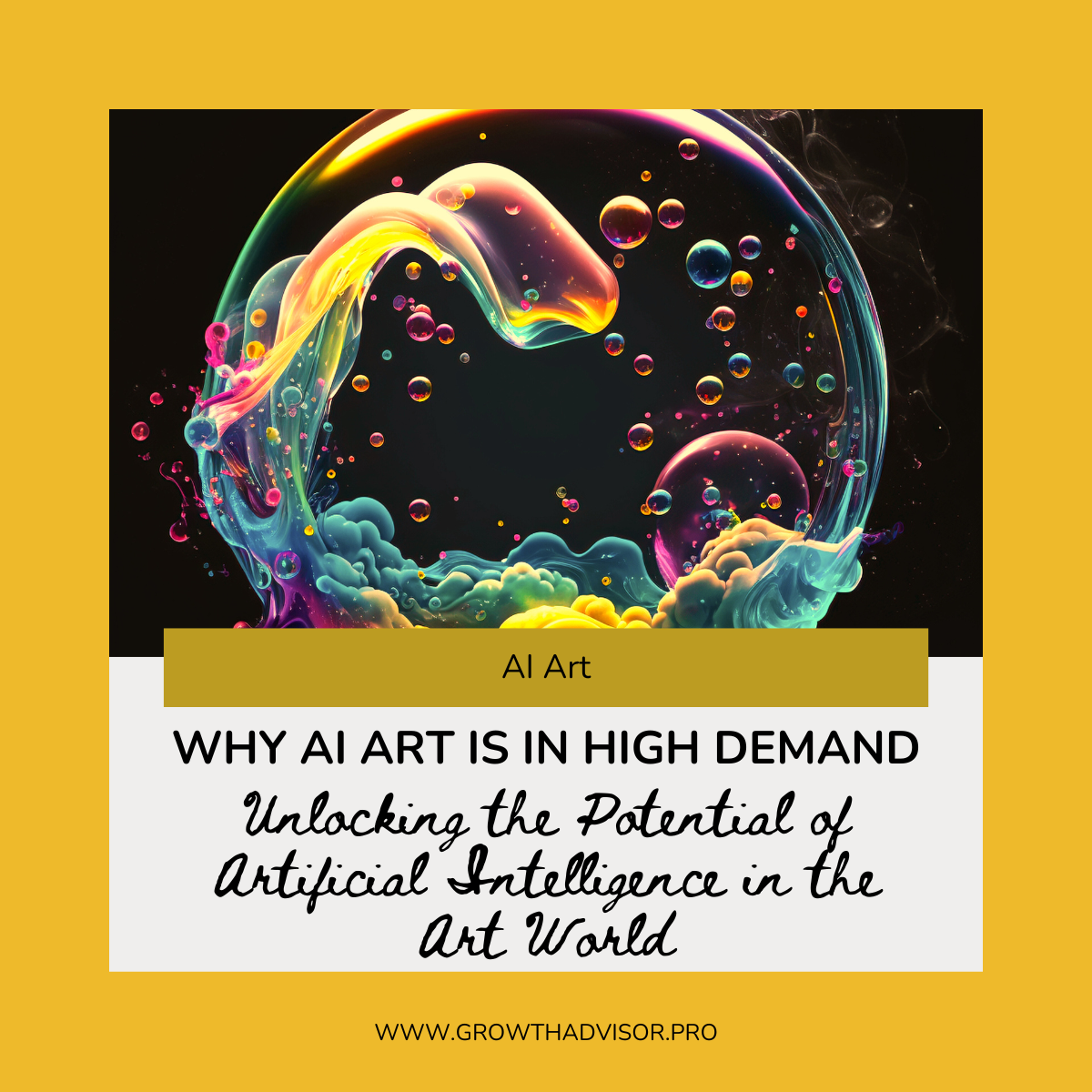
AI art encompasses the use of AI tools, software programs, and algorithms to create visually aesthetic artworks. It draws inspiration from modern art movements like Abstract Expressionism, Pop Art, and Pop Surrealism. AI art can manifest in various forms, including paintings, photographs, and cartoonish illustrations. Moreover, it extends its boundaries by integrating AI with mediums like augmented reality and virtual reality.
The High Demand for AI Art
AI art has garnered significant attention as a captivating and innovative artistic expression. In our digital age, AI art bridges the gap between the digital and physical worlds, enabling artwork to be displayed in galleries and museums. This trend has gained momentum within the art world, captivating a new generation of artists and collectors alike. The allure of AI art lies in its ability to offer a novel approach to creativity, where the “machine” assumes control over the artistic process.
The History and Evolution of AI Art
While the popularity of AI art is relatively recent, its origins can be traced back to the 1950s when artists first explored the potential of computer-generated art. The intersection of technology and artistic expression fascinated early pioneers, laying the foundation for exploring AI art as a commercial art form in the 21st century.
Early experiments with computer-generated art involved programming machines to create visual compositions based on predefined rules. However, the results were often simplistic and lacked the complexity and depth associated with human-created art. As technology advanced, so did the capabilities of AI art.
One notable milestone in the history of AI art is the development of generative adversarial networks (GANs). GANs are a class of AI algorithms that consist of two components: a generator and a discriminator. The generator creates new images, while the discriminator evaluates them based on their resemblance to real artworks. Through an iterative process, GANs can generate increasingly realistic and visually appealing art.
Benefits of AI Art
AI art brings forth several advantages that contribute to its rising demand:
Generating Art from Scratch
AI tools empower artists to create original and unique visual content without relying solely on traditional image manipulation techniques. Artists can generate art that aligns with their vision, offering limitless possibilities for creativity and customization. By leveraging AI algorithms, artists can explore new artistic styles and experiment with unconventional compositions.
Collaborative Opportunities
AI art allows artists to collaborate with AI tools, sparking new avenues for artistic expression. By engaging in a creative dialogue with the machine, artists can relinquish certain aspects of artistic control, allowing the AI to contribute to the artwork’s development. This collaborative process can result in unexpected and innovative outcomes, pushing the boundaries of traditional artistic practices.
Audience Appeal
AI art integrates popular trends from the art world, such as pop culture imagery, symbolic representations, and glitch art. By incorporating these elements, artists can create visually captivating artworks that resonate with a broader audience, expanding their reach and impact. The fusion of AI technology and artistic expression creates a unique and immersive experience for viewers, stimulating their imagination and provoking thought.
Commercial Viability
AI art transcends artistic movements, appealing to a diverse range of art enthusiasts. Its broad commercial appeal positions AI art as a viable avenue for artists to generate profit and establish themselves in the art market. Collectors and galleries are increasingly embracing AI art as a valuable addition to their collections, further fueling its market demand.
Limitations and Future Prospects
While AI art holds immense potential, it also faces certain limitations. Critics argue that AI-generated art lacks the human element and emotional depth found in traditional art forms. The intuitive decision-making process, personal experiences, and subjective interpretations of human artists contribute to the rich layers of meaning found in their artworks.
Moreover, AI-generated art relies heavily on existing datasets and patterns, potentially limiting its originality and ability to break new ground. AI algorithms learn from existing data and generate outputs based on those patterns, which can result in a lack of true novelty in the artworks created. Critics argue that true artistic innovation comes from human imagination and the ability to transcend existing conventions.
However, as AI technology advances, these limitations are expected to be addressed. Researchers and artists are continuously exploring ways to enhance AI algorithms to produce more emotionally evocative and original art. The integration of AI with other emerging technologies, such as virtual reality and augmented reality, opens up new possibilities for immersive and interactive art experiences.
Conclusion
The increasing demand for AI art stems from its ability to blend cutting-edge technology with artistic expression, resulting in visually captivating and thought-provoking creations. AI art opens up new realms of creativity, collaboration, and commercial success for artists, while simultaneously captivating a broader audience. As AI continues to advance, we can expect the boundaries of AI art to expand, unveiling even more innovative and remarkable possibilities for artistic expression in the future. The evolving landscape of AI art presents a dynamic and transformative force in the art world, redefining traditional notions of creativity and challenging our understanding of what it means to be an artist.