Artificial intelligence (AI) has emerged as a disruptive force across various industries, and the art world is no exception. With the advent of AI and machine learning, the way artists create, curate, and exhibit art is transforming. In this article, we will delve into the realm of AI art, exploring its definition, working principles, historical evolution, and diverse applications.
Understanding AI Art
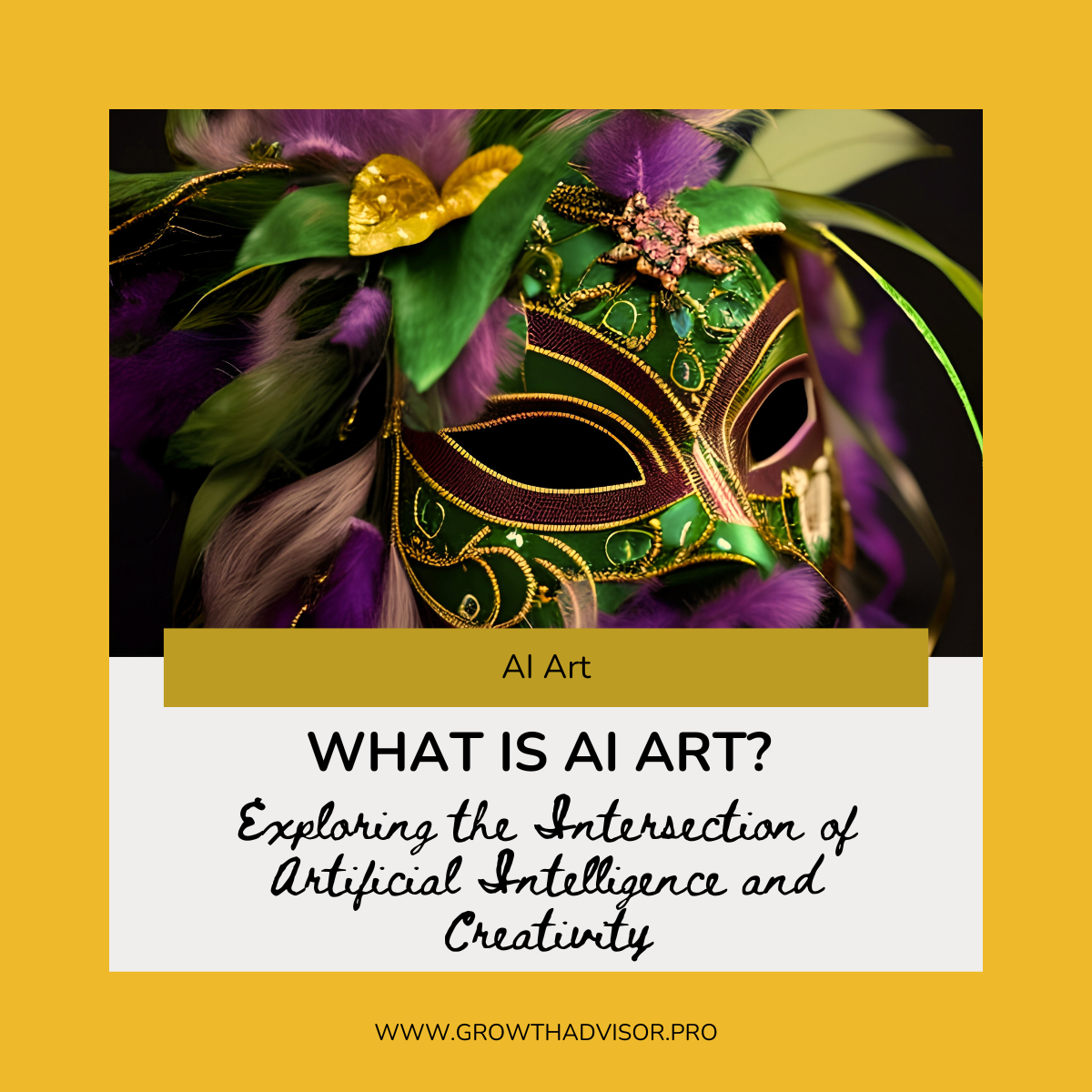
AI art refers to artworks that incorporate or are created by artificial intelligence. It involves leveraging machine learning algorithms and large datasets to generate new artistic creations or analyse existing artworks. While AI-generated art often reflects data-driven aesthetics, it can extend beyond visual representation and interact with humans. Artists employ different approaches, using AI as a tool in their creative process or as the foundation for their artwork from the outset.
The Mechanics of AI Art
The advancement of AI has made it possible to produce art that closely resembles human-made works. AI can generate art based on existing datasets, create algorithmic generative artwork, or even fabricate convincing forgeries of real artworks. Here are a few examples of AI-based art:
- Generative Artwork: This type of art involves algorithmically creating visual artworks based on existing data. Artists can employ existing datasets or develop their data-driven algorithms to generate unique and dynamic artworks.
- AI-Assisted Artwork: AI-assisted artwork entails human artists utilising machine-learning software to enhance and augment their creative process. AI acts as a collaborator, providing suggestions, exploring possibilities, and assisting in the artist’s decision-making.
- AI-Generated Forgeries: AI can manipulate digital images and videos to create counterfeit artworks that closely resemble genuine pieces. Such forgeries can pose a challenge in terms of identification and authentication.
The Evolution of AI and Art
Although AI art is a relatively recent phenomenon, its roots can be traced back to the 1950s. Ben Laposky, an American Mathematician, created Oscillon 40 (1952) using an oscilloscope to manipulate electronic signals and photograph them in the shape of waves. In the 2000s, AI began to take on a more active role in creating visual art, leading to the emergence of visually compelling AI artworks as technology advanced.
Expanding Horizons
AI in the Art World: Beyond generating art, AI has the potential to revolutionise various aspects of the art world. Here are a few additional ways AI can be utilised in conjunction with art:
- Art Analysis: AI can analyse artworks to uncover hidden meanings, patterns, and visual metaphors within images. This can offer new perspectives and insights into the artistic expression and intent behind the works.
- Art Authentication: AI can assist in authenticating artworks and detecting potential forgeries by analysing various characteristics, such as brush strokes, colour palette, and artistic style, among others.
- Creative Writing: AI algorithms can generate new poetry, literature, or narratives inspired by existing artworks, providing a unique fusion of artistic expression and AI-generated language.
- Interactive Art: AI can contribute to creating interactive art experiences, such as virtual reality installations, enabling viewers to engage with art in immersive and innovative ways.
- Curatorial Assistance: AI can aid in curating exhibitions by assisting museum staff in identifying forgeries, organising exhibits, and enhancing the overall visitor experience through personalised recommendations.
AI art is still in its early stages, yet it has already produced captivating and unprecedented pieces that push the boundaries of creativity. As the potential of AI and advanced machine learning continues to be explored, we can expect to witness an exciting evolution of art that transcends our imagination. The fusion of artificial intelligence and artistic expression offers infinite possibilities where technology becomes a collaborator and inspiration for human creativity.