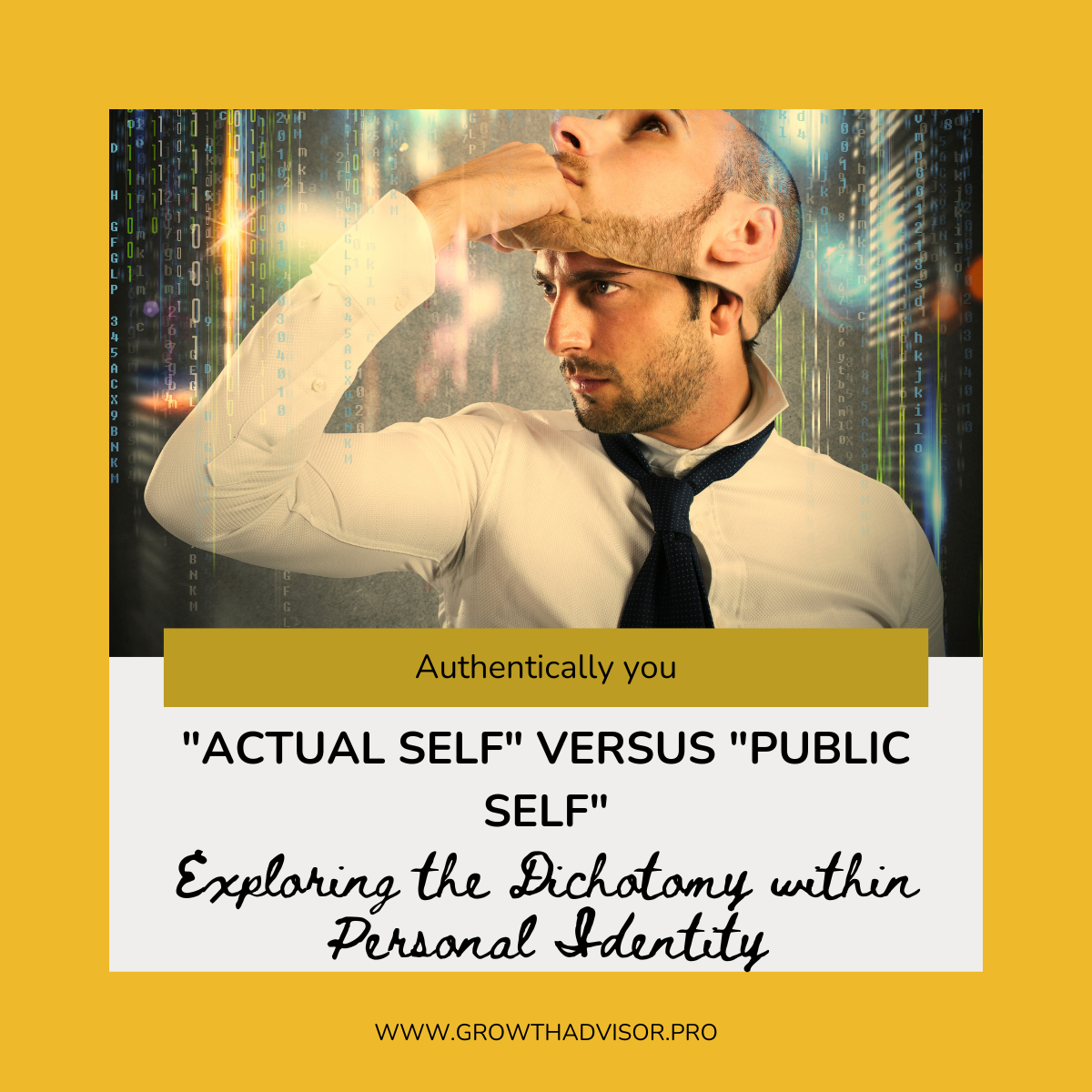
Every person has a complex identity, made up of their true “actual self” and a more social “public self.” The actual self represents who a person really is, but they often don’t display this to others. Sometimes, people behave in ways that don’t align with their true identity, creating a gap between their actual self and public self. This article explores the differences between actual self and public self, examining why this gap exists and how they differ.
Understanding the Dichotomy
The actual self and public self are key parts of human nature and social interactions. The actual self represents a person’s true thoughts, feelings, and actions, staying the same no matter what happens around them. In contrast, the public self is the image a person shows to others, influenced by societal expectations, social norms, and the wish to be accepted or approved.
The Discrepancy in Actions
Have you ever behaved in a way that felt unusual for you, making you think, “that was not like me”? This shows how the public self can lead us to act differently than our true selves. Imagine being at a work meeting with your colleagues. Your boss offers a variety of doughnuts and pastries, even though you usually prefer savory breakfasts. Still, you find yourself munching on the sweet treats at the table.
Why did you eat the pastries when you usually don’t like sweet breakfast foods? This shows how the public self can influence choices. You might have wanted to fit in with your colleagues, please your boss, or value social interaction over your own tastes. This example highlights that while you know you don’t enjoy sweet breakfasts, the public self chose to conform and meet social norms instead of sticking to personal preferences.
The Impact of Societal Pressures on the Development of the Public Self
The public self is strongly linked to society’s expectations and pressures. From a young age, people learn to fit in with social norms and standards. This upbringing can greatly influence how the public self develops and how individuals show themselves to others.
In many cultures, there are set roles and behaviors that are seen as acceptable. These expectations can strongly influence individuals, pushing them to show a public self that fits these norms. For instance, some jobs may require people to display a certain image or attitude. Similarly, social ideas of beauty, success, and achievement can pressure individuals to conform and present a public self that aligns with these standards.
Moreover, the growth of social media and online platforms has increased the effects of societal pressures on how people see themselves. The constant exposure to perfect images and curated lives on social media can make individuals feel they need to show an ideal version of themselves to be accepted. This can cause a disconnect from their true selves as they try to live up to the expectations set by influencers and peers.
Key Differences between the Actual Self and the Public Self
Understanding the difference between our true self and how we present ourselves to others can be difficult, as they often blend together. By looking at their key features, we can better see how they differ. Here are some differences that highlight the contrasts between the actual self and the public self:
- Intuition and Self-Awareness:
The actual self is closely connected to an individual’s intuition, relying on internal guidance to make decisions and navigate life. It is in tune with one’s instincts, emotions, and genuine desires. Conversely, the public self tends to be more self-aware, sometimes to the point of self-consciousness. It may require calculation and planning, as individuals consciously consider how their actions will be perceived by others. - Values and Authenticity:
The actual self reflects an individual’s core values, representing their true beliefs and principles. It exudes authenticity, with their genuine self-expression flowing naturally from within. In contrast, the public self can feel forced, as individuals may find themselves adjusting their behavior to align with societal expectations or to gain social approval. - Internal Focus versus External Focus:
The actual self prioritizes internal experiences, focusing on one’s own feelings, thoughts, and internal conflicts. It sees oneself through personal lenses, interpreting and evaluating experiences based on personal perspectives. In contrast, the public self is more attuned to the external environment and other people’s reactions. It may place greater importance on conflicts with others, the feelings of others, and the need to conform to social norms. - Self-Perception:
The actual self perceives oneself through a personal lens, acknowledging personal growth, strengths, and weaknesses based on one’s internal standards. In contrast, the public self views oneself through the eyes of others. It relies on external validation and considers how one is perceived by society, often leading to the formation of a self-image shaped by social judgments and expectations.
Strategies to Align the Actual Self and the Public Self
While the private self and public self may differ sometimes, individuals can use strategies to connect them and create a more genuine sense of self:
- Self-reflection: Engaging in introspection and self-reflection allows individuals to gain a deeper understanding of their values, desires, and true identity. This self-awareness serves as a compass for aligning their public self with their actual self.
- Authenticity: Embracing authenticity involves honoring one’s true self and expressing it genuinely, even in the face of societal pressures. It requires individuals to let go of the need for constant validation and acceptance from others and prioritize their own well-being and happiness.
- Boundaries: Setting healthy boundaries is crucial for maintaining the integrity of the actual self. This involves identifying one’s limits and asserting them when necessary, even if it means disappointing or challenging the expectations of others.
- Supportive relationships: Surrounding oneself with supportive and accepting individuals who value and appreciate the actual self can provide a nurturing environment for personal growth and self-expression.
The Importance of Self-Acceptance
In reconciling the actual self with the public self, self-acceptance is crucial. Accepting both strengths and flaws helps individuals embrace their uniqueness and find inner peace. It releases them from seeking external approval and enables them to live authentically and confidently.
Self-acceptance also enables individuals to extend empathy and understanding towards others, recognizing that everyone has their own struggles with the actual self and the public self. It fosters a culture of acceptance and celebrates diversity in all its forms.
Conclusion
The difference between our true selves and how we present ourselves to others is a complicated part of identity. It’s important to understand why this difference exists, how societal pressures affect us, and how we can bring these two sides together for a more authentic and satisfying life.